Theo Perisic

Theo Perisic

AI engineer.

I build AI products and help teams put AI to work.

Shipping production AI since 2022.

Previously

Caffeine.aiLiveProduct Engineer, Growth at DFINITY400,000+ users. Co-led a 67% cut in the monthly AI bill.

67% lower monthly AI costs

Work I co-led at Caffeine.ai.

BeforeAfter
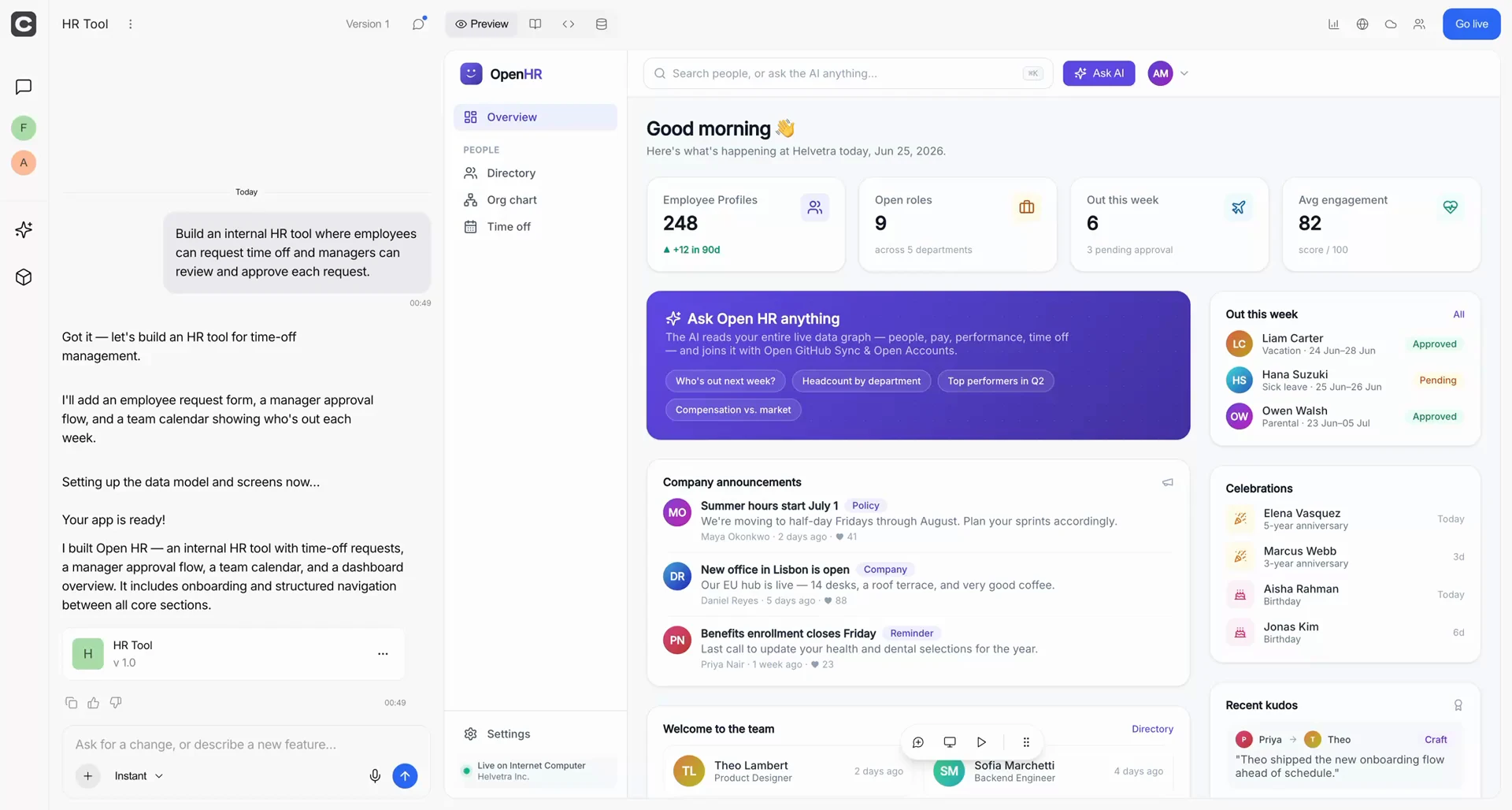
Caffeine’s builder showing the written HR app request and completed app side by side
Official Caffeine product demo. My contribution is described below.

Caffeine lets people build an app by describing what they want. At DFINITY, I worked on the AI that turns those requests into working apps, for a product used by 400,000+ people.

Product Engineer, Growth · Dec 2025 to May 2026

Cutting the AI bill by two-thirds

Caffeine’s AI bill ran into seven figures each month. We tested less expensive AI for individual tasks and reused repeated instructions. I co-led this work, which cut the monthly bill by 67%. We changed a task only when it still passed our quality tests.

Understanding what users struggle with

The growth team had to gather information from several places before deciding what to improve. I built an AI assistant the entire team used to ask “What are our users struggling with most?” or “What do they do after joining?” It pulled answers from PostHog, the product analytics tool, and other data sources, so the team could move from looking up information to acting on it.

Helping new users get started

I built the steps that guide someone through their first use of Caffeine. In a limited rollout, the measured conversion rate increased by 120%+.

Visit Caffeine.ai
Fine-tuning AI for bank supportExperiment, 202694.4% accuracy from a fine-tuned classifier; 100,000×+ lower estimated electricity cost versus Claude API fees

I fine-tuned a small classifier to sort bank support messages. It correctly categorized 94.4% of the same 500 messages that Claude Opus scored 95.0% on. Across the full 3,080-message test set, it scored 93.7%.

The task has 77 fixed categories, such as a lost card or a delayed transfer. Training a model for this narrow job brought it close to Claude’s accuracy, with no API fee for each answer.

Why the cost difference is so large

The classifier processes messages in batches locally. Based on its measured throughput and a 60 W power assumption, electricity costs about $0.000003 per 1,000 messages. Claude’s recorded API cost was about $0.75 for the same volume in batches of 25.

That is roughly a 254,000× difference. The 100,000×+ figure rounds it down. It compares estimated electricity with API fees; it is not a measure of total business savings.

Accuracy on the same 500 messages Fine-tuned model94.4% Claude Opus95.0%
100,000×+Lower estimated inference cost: electricity for the fine-tuned model compared with Claude API fees. Claude API fees≈$0.75 Fine-tuned model≈$0.000003← smaller than one pixel
Magnify the cost chart 100,000×

Same prices. Both bars magnified 100,000×.

Per 1,000 messages, batched. Electricity estimated at 60 W and $0.18/kWh. Excludes hardware, training, engineering, and idle time.

When the small model is unsure

Sending the least certain 7% of messages to Claude raised the combined accuracy to 96.4%, with 93% handled locally. Estimated API and electricity cost was about $0.05 per 1,000 messages. This was an exploratory test on the same sample, with several confidence thresholds compared.

Separate experiment: fine-tuning a 4B language model

The 94.4% result above comes from the RoBERTa classifier. I also tried LoRA fine-tuning on a different model, Qwen3.5-4B. Its free-generation accuracy rose from 66.8% to 86.4%. The classifier remained the better tool for this fixed set of categories.

How training works
An illustrated walkthrough of training and testing on the bank-message dataset. Drawn with Anatomy.
Test method and cost assumptions

Banking77 contains 77 types of customer-support request. The fine-tuned RoBERTa classifier answered 472 of the shared 500 messages correctly; Claude Opus answered 475. On the full test set, the classifier answered 2,886 of 3,080 correctly. This is one dataset and one training run, not evidence that the small model can replace Claude on open-ended tasks.

The classifier’s throughput was measured in batches of 64. The reported roughly 1 ms per message is amortized throughput, not the latency of a single request. Electricity is estimated from that throughput at 60 W and $0.18/kWh; power was not measured. Claude’s CLI reported $0.3732 for 500 messages in batches of 25, on a list-price basis. The ratio excludes hardware, training, engineering, idle time, and other operating costs.

The 96.4% combined result uses a 0.9 confidence threshold. Several thresholds were compared on the same test sample, so it needs independent validation. Its $0.05 cost is projected from a 7% fallback share at the recorded batch price, not a measured live bill.

Six test messages exactly duplicate training texts, including two in the 500-message sample. Excluding these leaves the rounded accuracy scores unchanged: 94.4% for the classifier, 95.0% for Claude, and 93.7% on the full classifier test.

Products I’m building

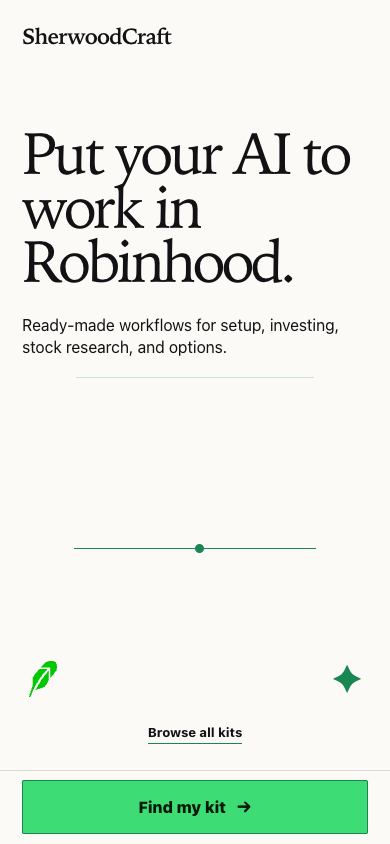
SherwoodCraftLive, 2026Workflows for using AI with Robinhood

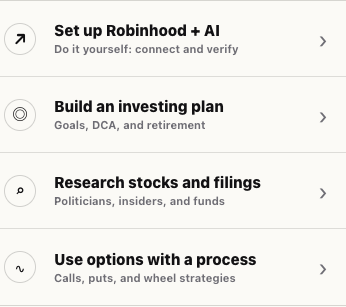
Ready-made instructions that help an AI assistant research investments using Robinhood. The kits cover setup, stock research, and options, and connect through Robinhood’s official AI integration.

  • Independent and not affiliated with Robinhood. Workflows, not investment advice.

Cloudflare Workers, Stripe, Resend

sherwoodcraft.com

SherwoodCraft home pageSherwoodCraft’s live kit chooser asks what the person wants help with
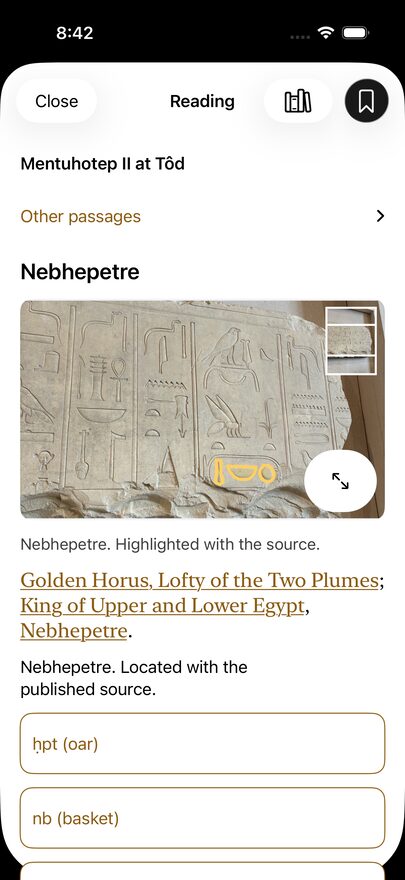
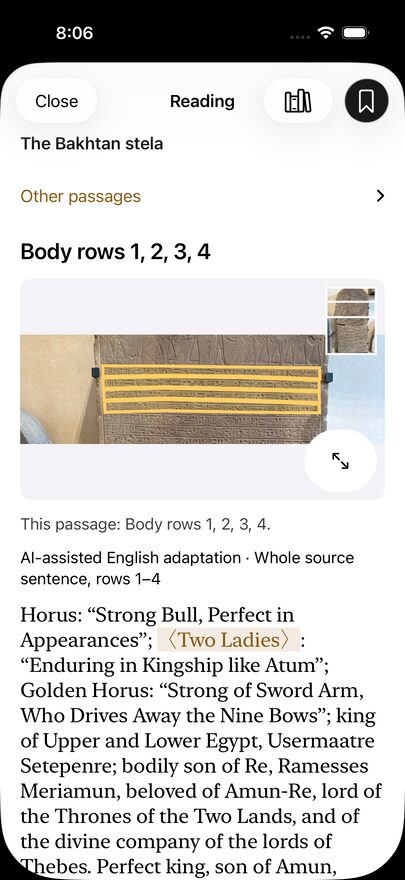
GlyphyBeta, 2026Reads hieroglyphs on the phone, offline

Point the phone at an ancient Egyptian inscription and Glyphy helps you read it: the signs, their sounds, and the published text they belong to.

  • Recognition runs on the phone. Cloud reading is optional and asks before each photo leaves the device.
  • It holds back when unsure. I rejected upgrades that found more inscriptions but also gave more wrong matches.
  • Field-tested at the Louvre.

Swift, SwiftUI, on-device vision, Cloudflare

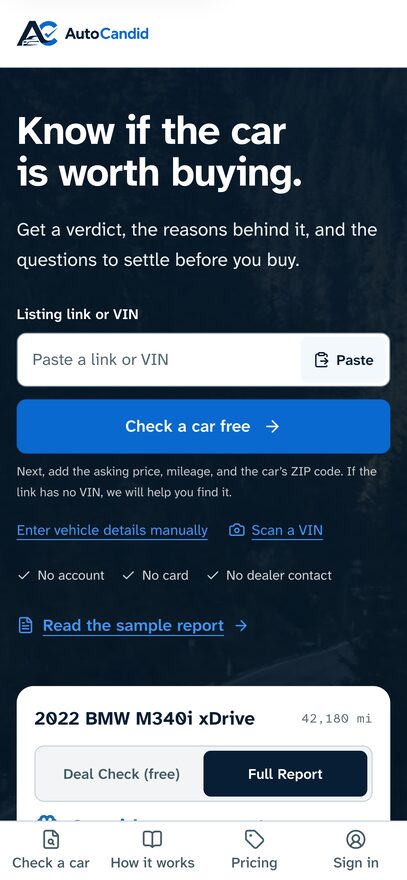
AutoCandidPre-launch, 2026A verdict on a car listing, with the evidence

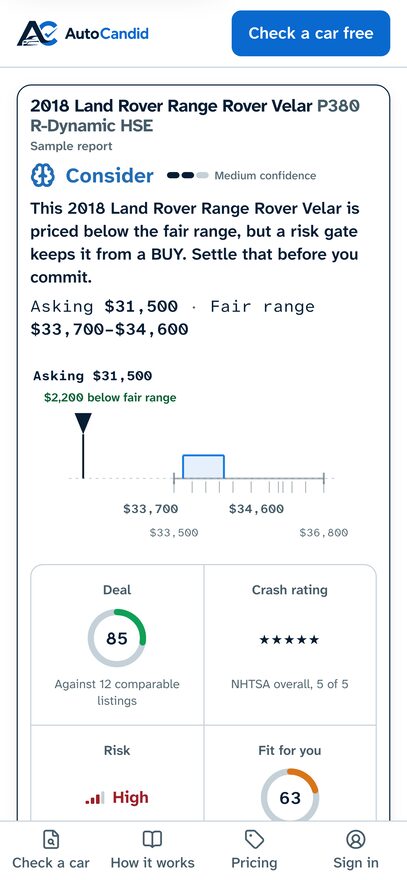
Paste a car listing or VIN and AutoCandid gathers the evidence, then returns Buy, Negotiate, Consider or Pass, with sources and a clear account of any missing information.

  • Dealers cannot pay for a better score.
  • Co-founder. Working name, in private preview before launch.

Next.js, Cloudflare, Supabase

The homepage asks for a listing link or VIN to check if a car is worth buyingA sample report for a Range Rover Velar with its verdict, price against the fair range, and scores
PartnerBudgetBuilding, 2026Money for two. One shared picture.

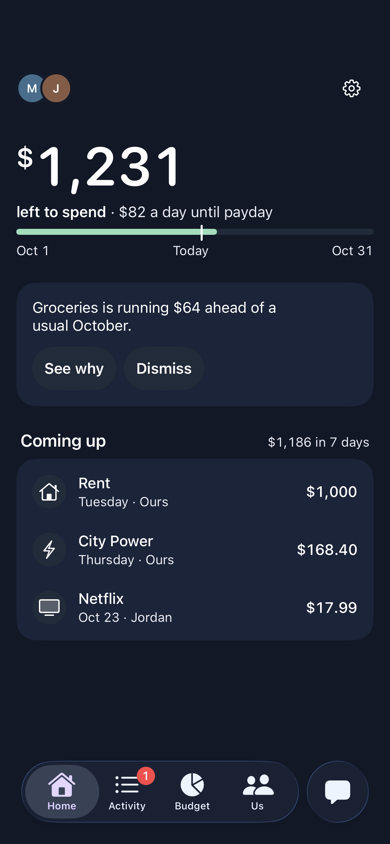
Separate accounts, one shared picture. PartnerBudget helps two people follow their budget, bills, and spending together, while choosing which accounts stay private.

I’m building versions for iPhone, Android, and web. The budget is calculated by ordinary rules, so the numbers stay consistent. An Ask feature is in development to help explain them.

In development. SwiftUI, Kotlin, TypeScript.

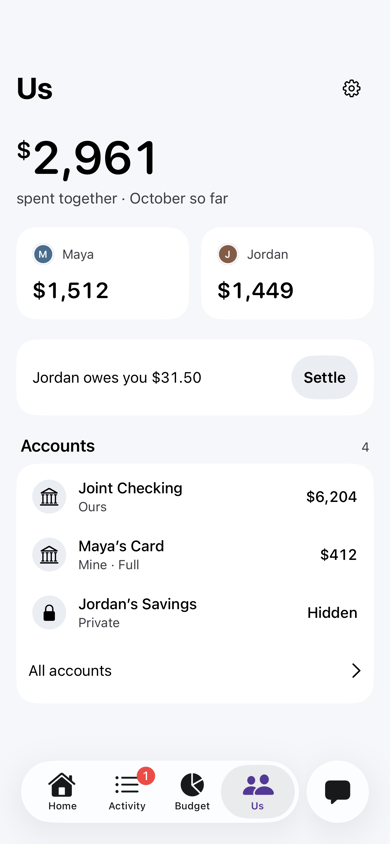
Home shows $1,231 left to spend, a pace bar to payday and upcoming shared billsPartnerBudget’s Us screen with shared spending, each partner’s contribution, and an account marked Hidden
TurnerBuilding, 2026Learning that adapts to each person

Education often asks everyone to learn the same way. Many people never get the chance to discover what helps them understand, remember, and use what they learn.

I’m building Turner to help each person discover that through practice and feedback, then adapt the learning experience with them. The aim is continuous learning, shaped around the person and what they want to understand.

The current prototypes explore lessons people can practice and get feedback on. One teaches programming; the goal is to support learning across many subjects.

In development. TypeScript, Rust, local models.

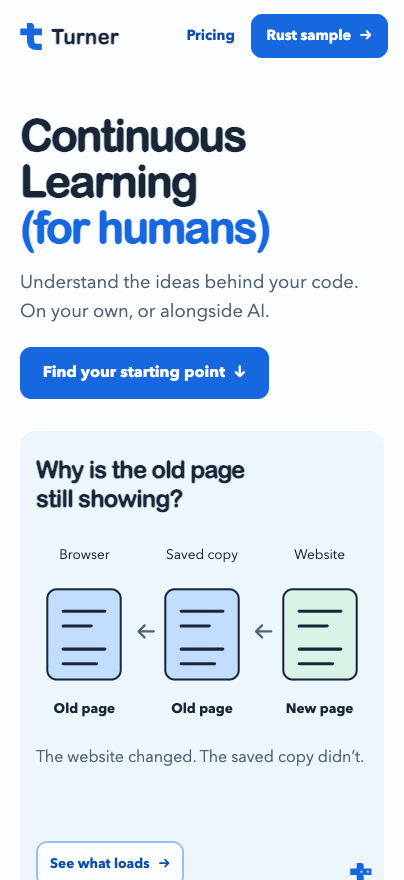
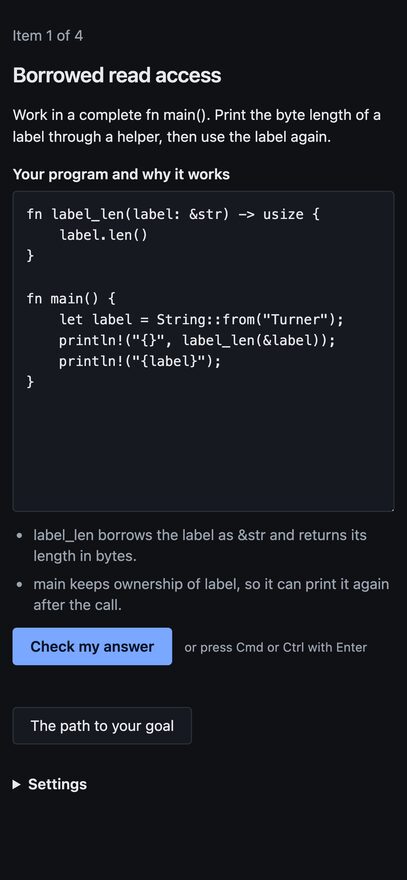
Turner’s current prototype homepage introducing continuous learning for humansOne current lesson prototype: writing a Rust borrowing program and explaining why it works
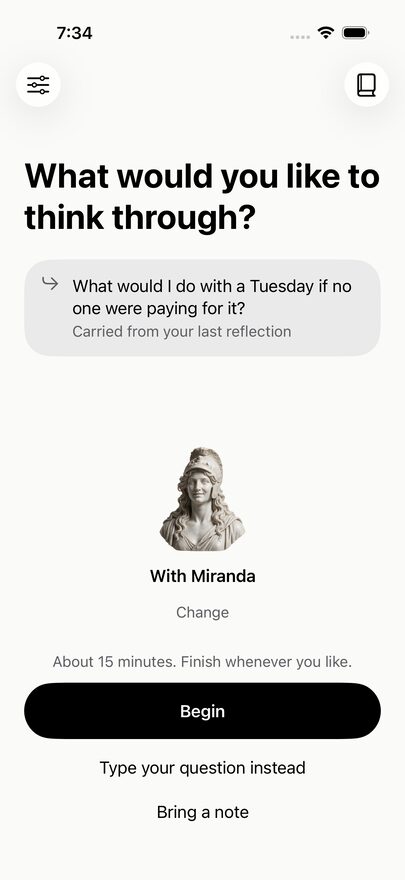
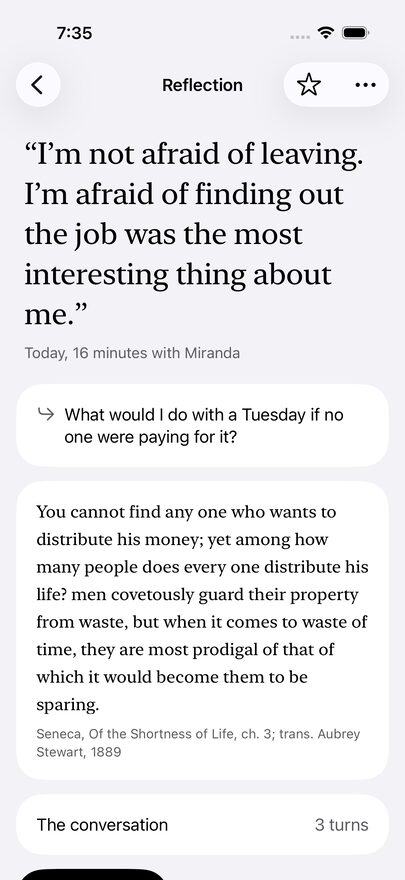
AbderaBuilding, 2026A voice companion for thinking things through

Talk through a question with a voice guide, sitting down or on a walk.

  • Sessions of 10 to 20 minutes, with room for silence and an early end.
  • Save the conclusion in your own words.

Not released yet. Swift 6, SwiftUI, voice.

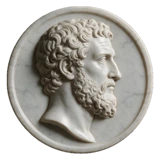
The start screen asks what you would like to think through, with a question carried over from the last reflection and a Begin buttonA saved reflection opens with a quote from the user, followed by a passage from Seneca
More experiments and past work
ic-mcpOpen source, 2025Tools for coding agents building on the Internet Computer

AI coding assistants need the right instructions and a way to check their work. I built a tool that gives Claude Code and Cursor documentation, examples, and checks for apps built on the Internet Computer network. Downloaded 3,400+ times.

View on GitHub

An on-chain language modelOpen source, 2026Running a language model on the Internet Computer

I ran an AI language model on a blockchain network: the Internet Computer. The experiment explores a different way to host AI, with encrypted questions and replies whose origin can be checked.

Technical details

The 8-billion-parameter model runs across multiple network messages, processing one group of layers at a time. It uses vetKeys for encrypted prompts and certified replies for verification. Built on onicai’s llama.cpp canister.

View on GitHub

VolmatePilot, pausedAI assistant for FX options brokers

Currency-options brokers need answers they can trace back to a source. I built a pilot AI assistant that searches sample desk data and cites where each answer came from. Built in 2025, then paused.

  • I also tested a faster way to choose which AI should handle a question. On 171 recorded broker queries, a small system made that choice in 9 milliseconds and asked a larger AI when unsure. Its choices agreed with Claude Opus 83% of the time, up from 27.5%. This was an offline test of those choices, not a measure of answer accuracy or a live rollout.

volmate.ai

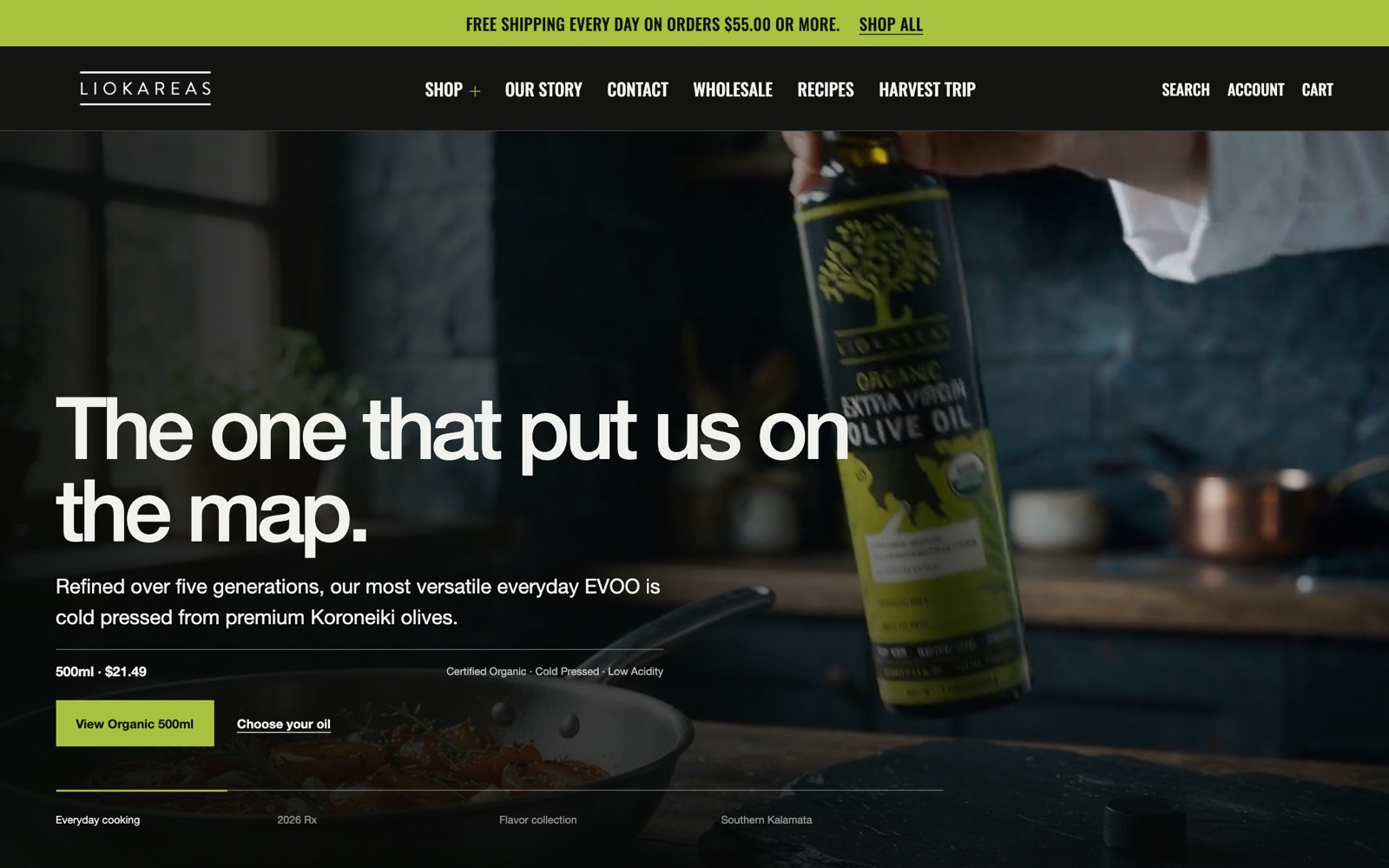
Liokareas storefrontDesign study, 2026A design study of an olive-oil brand's online store
The study's first screen: an olive oil pour, the headline The one that put us on the map, the 500 ml price and a View Organic 500ml button

An independent redesign of the Liokareas olive-oil store, built as a complete, working front end that hands off to the brand's existing Shopify checkout.

The decisions behind the hero

  • Lead with the best-selling bottle. The first screen names the best seller, its price and its certifications, with one button to buy.
  • Let the product move. A short pour plays on load, starts fast on phones, and holds still for anyone who prefers reduced motion.
  • Make the next step obvious. "Choose your oil" compares the four oils with listed prices for anyone not ready to buy.

Not affiliated with Liokareas. React, TypeScript, Vite, Shopify handoff.

View the study

The study's home page on a phone with the olive oil pour and the everyday bottle's priceThe Choose your oil comparison of Everyday, Flavor, Tuscan Herb and Rx oils with prices

Experience

  1. Swissy SystemsMay 2026 to nowFounder, AI products and engineeringGlyphy, Abdera, Turner and PartnerBudget.
  2. Stealth AI cost startup2026Co-founder and CTOBuilt a system to measure what each usable AI answer costs. In tests using recorded requests, it replaced AI with ordinary code for tasks that did not need AI.
  3. DFINITY, Caffeine.aiDec 2025 to May 2026Product Engineer, GrowthBuilt core app-generation features, reduced AI costs, and helped the growth team get answers from its data. Read the work.
  4. HarmonyJan 2023 to Dec 2025Head of Product, reporting to the CEOLed 18 direct reports and shipped 8 products, including a voice-first AI assistant for iOS in 2023.

    Voice AI in 2023

    A voice-first assistant for iOS that combined on-device speech recognition with GPT-4, built with a team of iOS engineers.

    Running product

    I managed 18 direct reports and an outside engineering partner, hired 3 people, owned the product budget, and redesigned the token economics, adding $5M to company reserves.

  5. PartyhatsFeb 2024 to Nov 2025Co-founderCo-founded a system for settling payments on a blockchain. $2M+ settled for 1,200+ people.
  6. learn.xyzOct 2022 to Jan 2023Associate Product ManagerUsed OpenAI models in production from ChatGPT's launch. Learn.xyz now turns company documents into AI-built training.

About

I grew up speaking French, then English and Spanish. I studied philosophy at Southwestern University, with a minor in computer science.

These days I’m building at Swissy Systems: Glyphy for ancient inscriptions, Turner for learning that adapts to each person, and Abdera for thinking things through.

Philosophy still shapes how I work: getting clear on the question is often as useful as finding an answer.

The full work history is in my resume.

Southwestern University's Cullen Building above the trees of Georgetown, Texas, at sunset
Southwestern University, Georgetown, Texas. B.A. Philosophy with a Computer Science minor.
Languages
French, English, Spanish

Skills & tools

AI tools
  • Claude Code
  • Claude Cowork
  • Codex
  • Pi
  • Hermes Agent
  • OpenClaw
  • Instinct
Models & optimization
  • LLM evaluation
  • LoRA fine-tuning
  • Typed decision models (Jev / System One)
  • Model routing
  • Prompt caching
  • Local and on-device inference
Agents & retrieval
  • Agent orchestration
  • MCP & tool use
  • Memory
  • Human approval flows
  • Retrieval-augmented generation (RAG)
  • Hybrid & graph search
  • Cited answers & abstention
Languages & interfaces
  • TypeScript
  • Python
  • Rust
  • Swift
  • React
  • SwiftUI
Infrastructure & data
  • Cloudflare Workers
  • AWS Bedrock
  • Internet Computer
  • PostHog
Product & leadership
  • Product strategy
  • Team management
  • Hiring & budgets
  • User research
  • Onboarding & rollout
  • Measuring results